
Your Reactive Dog Doesn’t Need Obedience Training
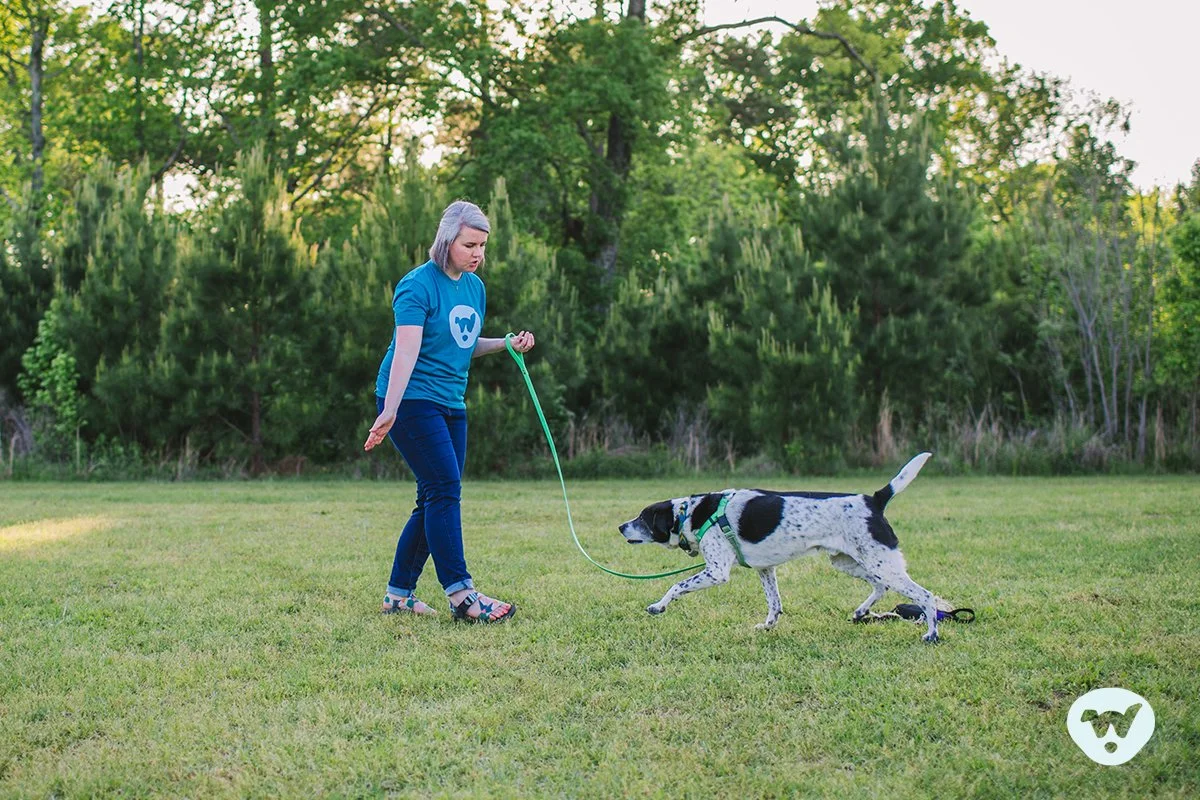
Eryn uses “touch,” a hand target cue, to redirect Hossa away from potential triggers.
You love your reactive dog and want the very best training for them.
But you’re feeling in over your head with all of their barking and lunging at the sight of other dogs and people! So, isn’t it a good idea to sign them up for private obedience lessons or group obedience classes?
Knowing skills like sit, stay, come when called, and walking nicely on a leash are great for ALL dogs, but unfortunately, they aren’t the magic wand many people think when it comes to solving your dog’s reactivity.
So why does a well-trained “leave it!” cue fail when your dog sees their nemesis out on your walk?
Here’s why:
Obedience training does not address the underlying emotions causing your dog’s reactive behavior or teach your dog coping skills.
Obedience training is often about getting a dog to comply. Sit. Down. Stay. Heel. It prioritizes performance under distraction. Your reactive dog isn’t struggling with a lack of compliance — they are struggling with strong emotions such as fear, anxiety, and frustration. Their reactive behavior is communication.
“You scare me! Do not come closer!”
“I really want to see you, but I’m on this gosh darn leash and can’t!”
Dogs cannot perform behaviors on cue during times of increased stress.
Think of your dog’s emotional state like a stoplight:
There is a “green zone,” which is the think-and-learn zone. This is the ideal emotional state in which your dog is calm, can take in information, and performs known behaviors on cue.
The “yellow zone” is where your dog’s stress is beginning to mount. You might notice your dog dailing in on their trigger, and their response to known cues will be slower or nonexistent. They may begin to take treats harder or refuse treats altogether.
When a dog tips into the “red zone” (fight-or-flight), their thinking brain goes offline.
There is no asking your dog to perform cues — they can’t process your “leave it!” cue when they are this far gone. At this point, your best option is to maneuver your dog away from the trigger as quickly as possible. Get out of Dodge!
Some traditional dog obedience programs still rely on outdated training methods.
Some obedience programs may rely on outdated punishment or aversive techniques to curb undesirable behaviors. When these programs are seen as “successful,” your dog may appear calm, but their emotional struggle is the same, if not worse. This can lead to more intense reactions in the future and erode the bond you have worked so hard to build with your dog.
Pro tip: Always be your dog’s advocate! Learn the truth about dog training tools here, and learn how to pick a good dog trainer here.
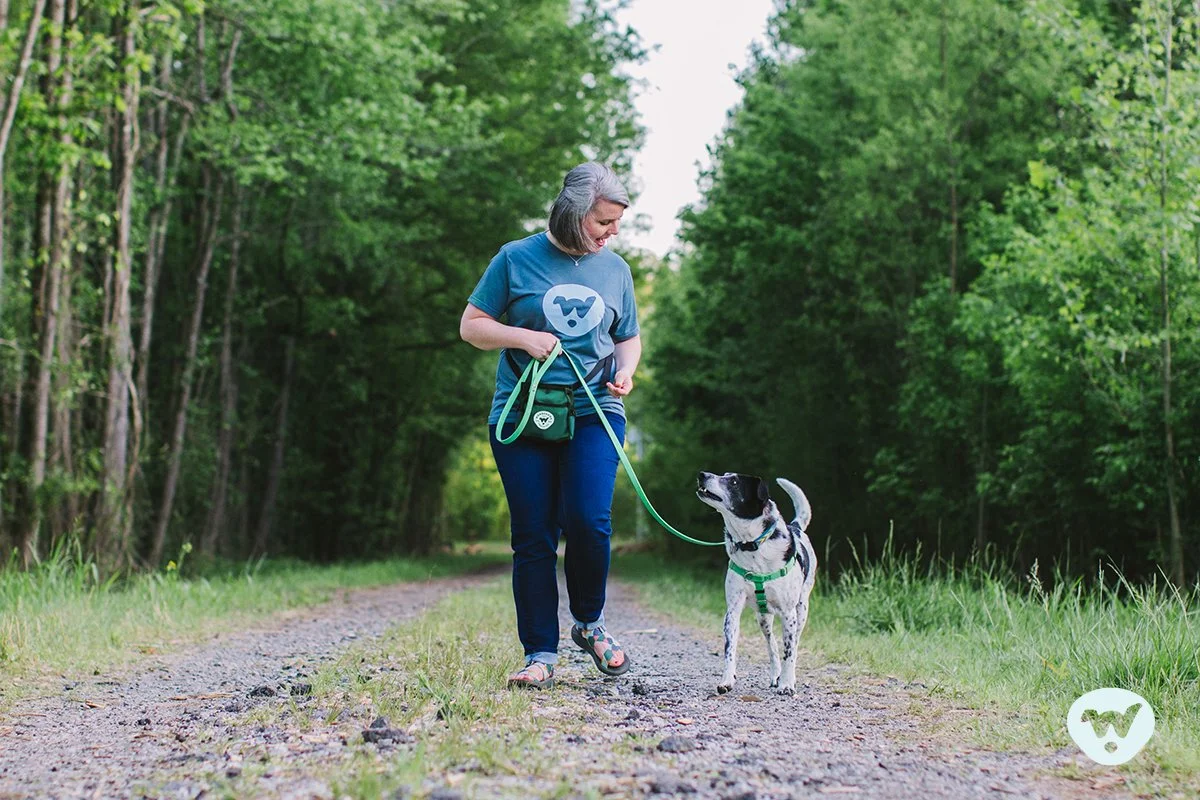
Hossa enjoys a relaxed walk without reacting to other dogs.
So what do you do?
Work with a fear free behavior professional to create a behavior modification program for your reactive dog.
Instead of obedience training that does not address your reactive dog’s underlying emotions, they need a comprehensive behavior modification program that prioritizes helping your dog feel safe, teaching alternative behaviors that support calmer responses, and gradual and careful exposure (plus counter conditioning) to help the dog learn that their trigger predicts safety — not danger.
This is where you’ll see your dog go from reactive to relaxed as true behavior change begins.
Supportive behavior modification for your reactive dog in Gainesville, VA.
All reactive dog cases begin with a Wonderdog Behavior Consultation. During this 90-minute appointment, we review your dog’s history, identify triggers, develop immediate management strategies to reduce stress, and work on preliminary training skills.
Behavior modification for leash reactivity and other reactive behaviors includes:
Ruling out underlying medical concerns with your veterinarian
Ensuring adequate physical exercise and mental enrichment
Implementing management strategies to reduce exposure to triggers
Teaching alternative behaviors that support calmer responses
Gradually changing your dog’s emotional response to stressors