
Help! My Puppy Turned into a Terrible Teenager.
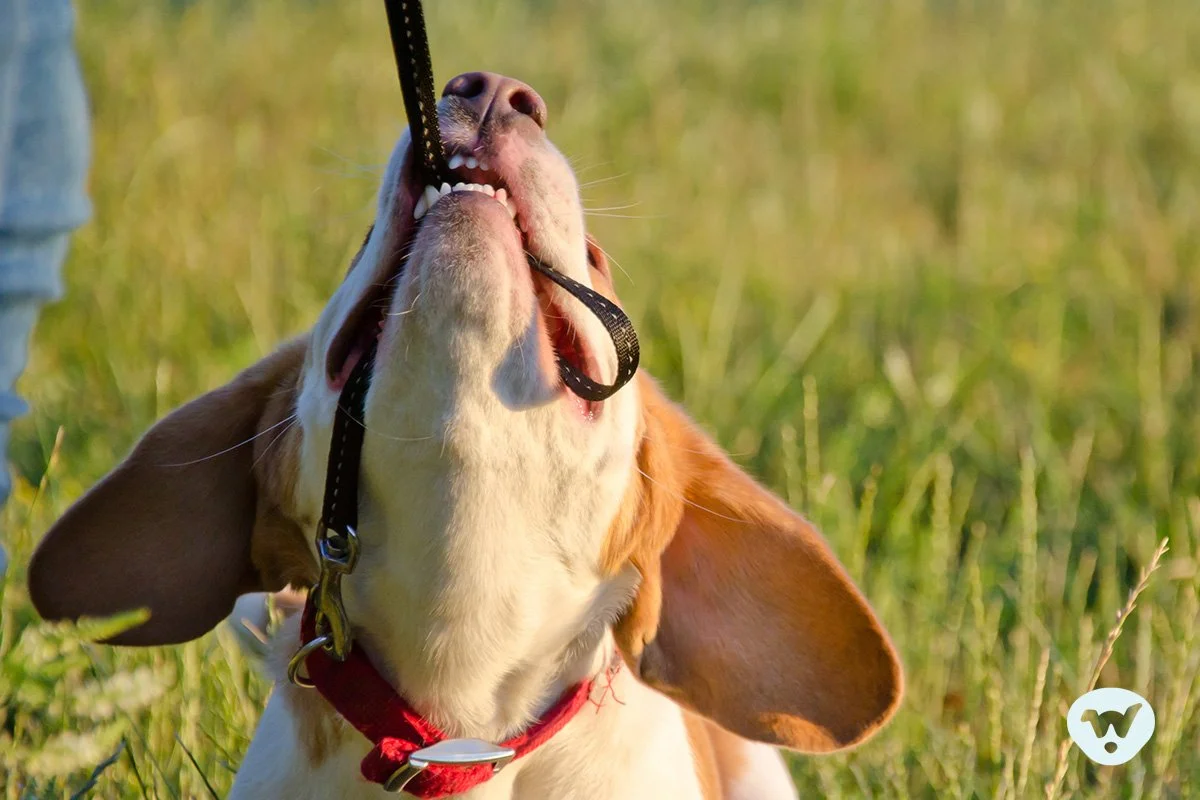
Leash tug is a frustrating game for you—but a fun one for your dog!
You brought home a cute cuddly puppy that’s transforming into a terrible teenager. What is happening?
Adolescence is a normal part of your puppy’s development! While it can certainly be frustrating, rest assured that it is normal and your puppy will grow out of it with time. For now, it’s up to you to guide your puppy through their new normal in a way that meets your puppy’s evolving needs and doesn’t have you pulling out your hair.
When does adolescence occur?
The adolescent period in dogs begins at approximately four to six months of age and, in large-breed dogs, can last up to 24 months of age.
signs your dog may be in their adolescent phase:
Exploration: Excessive leash pulling, counter surfing, and jumping.
Fear: Barking at people, other dogs, or objects (even those that are familiar to them).
Increased exercise needs: An increase in destructive chewing and digging.
Arousal: Unable to settle down, increased barking, and attention seeking.
Hormones: Altercations with other dogs.
Changing interests: Failure to respond to you or cues.
Adolescence is the most difficult time for owners and their dogs. Dogs are living in the moment and while it may be normal to want to “correct” or “nip behaviors in the bud,” this predisposes us to the use of punishment. Physical punishment can lead to defensive aggression and a lack of trust, both of which break down the human-dog bond.
Why does it occur?
The portion of the brain that controls the “fight or flight” response, impulsivity, pleasure-seeking, and risk-taking (called the Amygdala) matures much faster than the portion that controls thought and memory (called the Cortex). This makes adolescent dogs literally hard-wired for fearful behaviors, high arousal, and exploration during this period.
What else do I need to know?
Hyperactive Behavior
Each dog’s activity level is determined by a variety of factors. Certain breeds, such as sporting dogs, are bred for high energy, predisposing them to even higher energy levels during adolescence. In general, herding breeds tend to be more sensitive to changes in the environment. This sensitivity leads to a heightened sense of awareness and, during adolescence, a higher level of fearful behavior.
It is important to remember that hyperactivity or hypersensitivity are normal for many dogs in adolescence. You will need to be patient with your dog during this difficult behavioral phase.
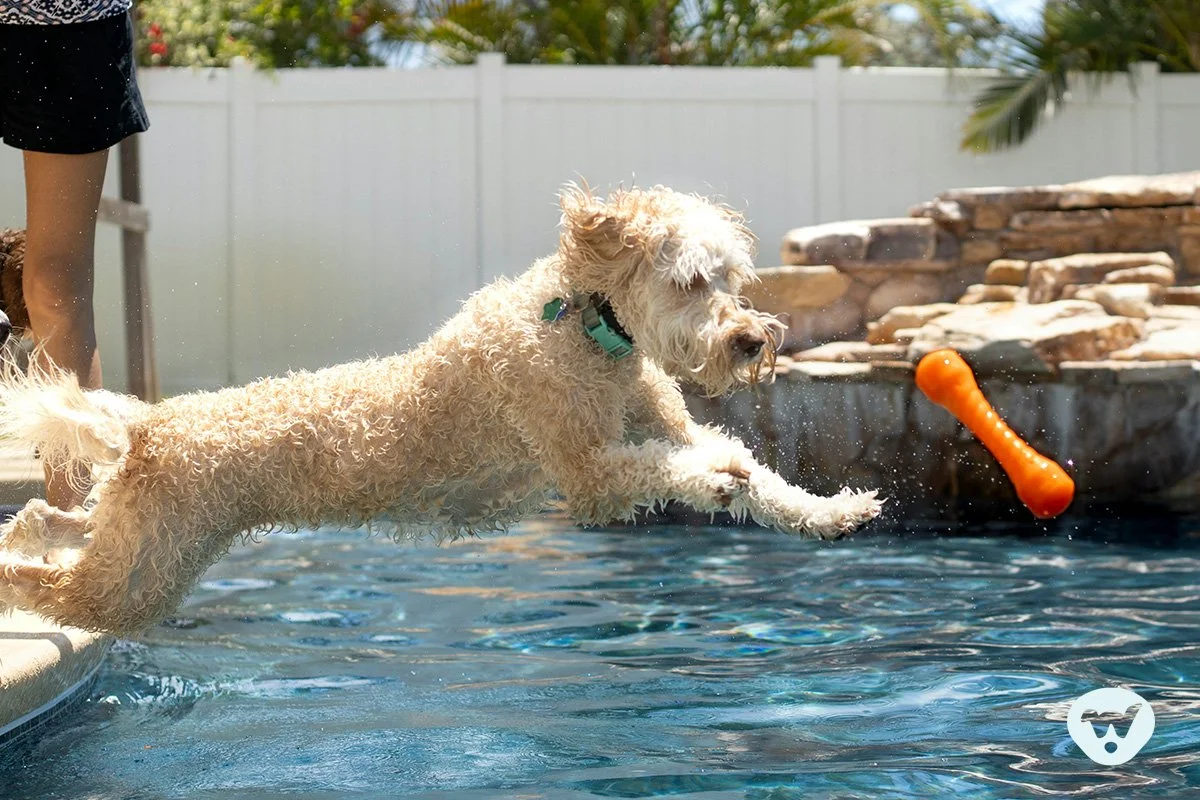
Swimming provides great physical exercise for your adolescent dog.
The Basics of Surviving Adolescence
Here are some ways to survive your dog’s adolescent phase!
EXERCISE THE BODY AND MIND
Make sure your adolescent dog gets exercised appropriately. This does not mean going for a long, vigorous walks (your dog’s bones are still growing.) Instead, opt for activities such as playing fetch or tug, running on soft ground, or swimming! Exercise for your dog’s mind must also be included daily. Nose work activities, puzzle toys, and clicker training are great ways to provide low-impact, brain-activating exercises that meet your dog’s need for mentally stimulating activities.
BE PROACTIVE
Management, management, management! Prevent opportunities for your dog to get into trouble when they are left alone. Remember how adolescent dogs are hardwired to explore their surroundings? Combine that with a heightened need to chew and it’s a recipe for trouble. Anything left within reach is fair game! Make sure to provide age and breed-appropriate chew items for your dog. They love to rip, shred, tear, and eat!
TRAIN, DON’T COMPLAIN!
Training does not take a lot of time if you do it right! It also should be fun for both you and your dog. Keep sessions short and make training a game whenever possible. You should use both food rewards and your dog’s favorite toys to help build solid behaviors. My blog, Dog Training for Busy Pet Parents, has some great ways to incorporate training into your day-to-day without feeling like you have to carve out large amounts of training time.
CREATE PREDICTABILITY AND CONSISTENCY
All dogs do best with consistent routines and predictable outcomes. Whether you are actively training or simply sitting on your couch, your dog is learning. Everyone within your family must be on the same page about what is expected from your dog so you can reinforce the behaviors you like and manage the environment to prevent the rehearsal of those you do not like.
AVOID THE “NOISE”
Humans are a verbal species, while dogs communicate primarily with body language. Your body language speaks louder than your voice to your dog. Avoid constantly using your dog’s name and try not to repeat your cues if your dog isn’t engaged with you. Instead, provide gentle guidance or manage the situation so that you don’t need to cue your dog on what to do.
Remember, THIS TOO SHALL PASS
Adolescent dogs are the most likely group to be relinquished to shelters or re-homed. Owners of adolescent dogs are often frustrated by what is normal canine behavior. Working with a modern, science-based trainer, using positive reinforcement will help your dog learn what you want him to do, rather than trying to correct unwanted behavior.
Don’t worry, most adolescent “delinquents” turn out to be wonderful adult dogs. Be patient and compassionate. Your adolescent isn’t trying to give you a hard time, he’s having a hard time adjusting to the human world.
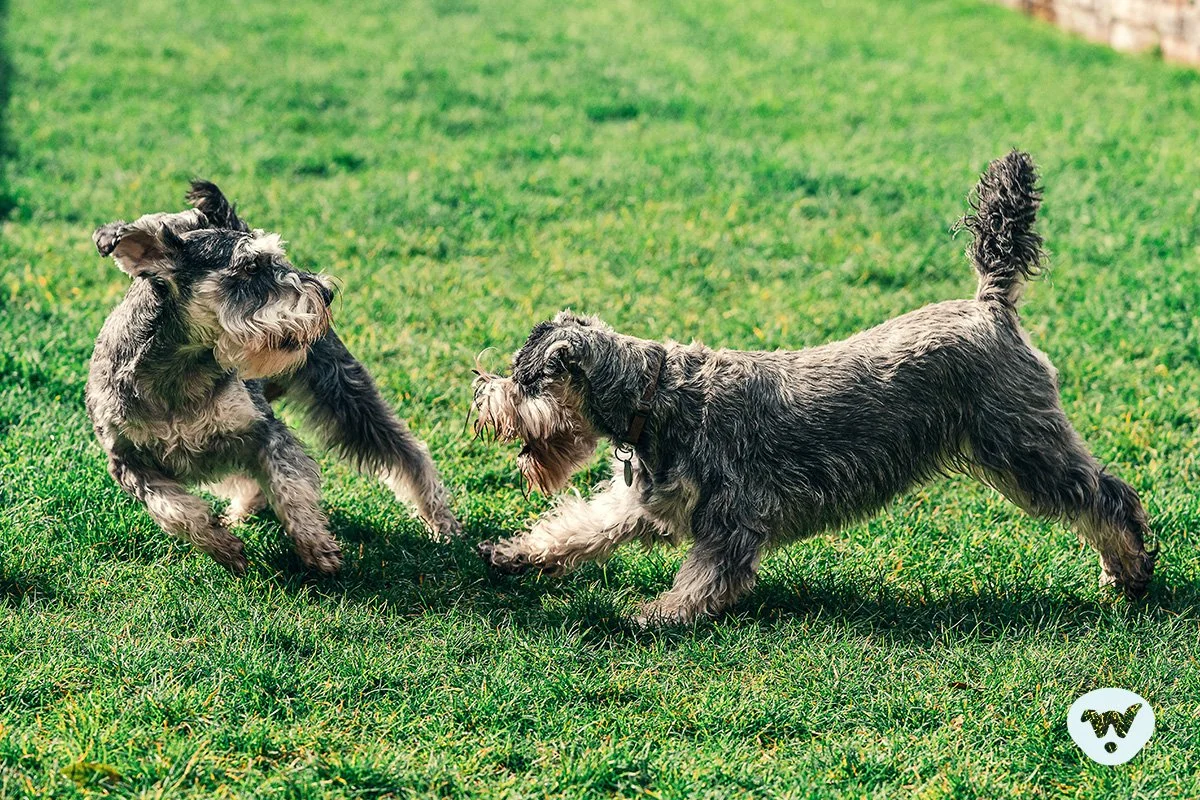
Adolescent dogs need to play!
Stages of Adolescence
The adolescent behavior phase begins at approximately four months of age and can last until 12-14 months of age for small or medium breeds and until 18-24 months for large or giant breeds
Here is what you can expect during the stages of adolescence.
Four to Six Months of Age
Playing & Play Fighting
Play is a rehearsal for adult behavior. Allow your puppy to play with a variety of other puppies and adult dogs that are tolerant of puppies. Play should include short breaks or pauses to keep the arousal levels low.
Remember that mounting behavior is an indication of arousal in play, not dominance.
Destructive chewing increases at this stage, so provide appropriate outlets for this behavior.
Fear & Resource Guarding
During adolescence, puppies may experience a fear phase, which is quite normal. This behavioral stage also often includes subtle signs of resource guarding. Resource guarding in dogs is a normal and natural behavior. How you respond to it may, in part, determine whether the behavior increases or decreases as your dog matures. Adolescent dogs may begin to guard valuable items such as chew toys, stolen items, favored resting places, and even people.
If your dog growls at humans while in proximity to his food bowl, a toy, a bone, or while in his bed consider this a warning sign. Do not punish him for growling as this is an inhibited bite! Contact a positive reinforcement dog training professional immediately so you can get help. Teaching your dog to trade for something better, like a hotdog or string cheese, can help reduce future conflicts!
Many owners mistake their dog growling at people entering the home, or that they’ve encountered on walks, as protective behavior. The reality is that growling at people is often a sign that your adolescent puppy is going through a fear period and his needs are changing. He most likely isn’t protecting you; he feels the need to protect himself!
Six to Twelve Months of Age
The following behaviors are often blamed on “dominance” (which is a debunked theory) or hormones:
Mounting/Humping
Hard Mouthing
Not Listening
Running Away/Refusing to Come When Called
Pulling on Leash
Unfortunately for our adolescent dogs, they often look like an adult, but their brains are still slowly developing. Male puppies do not reach normal, adult testosterone levels until as late as 18 months of age. Female puppies experience their first heat cycle as early as six months of age in toy/small breed dogs, while it may be delayed until as late as 14 months in larger breeds. The reality is that hormones play a relatively small role in behavior at this age, and a really big role in the physical development of breed characteristics, bone, and soft tissue.
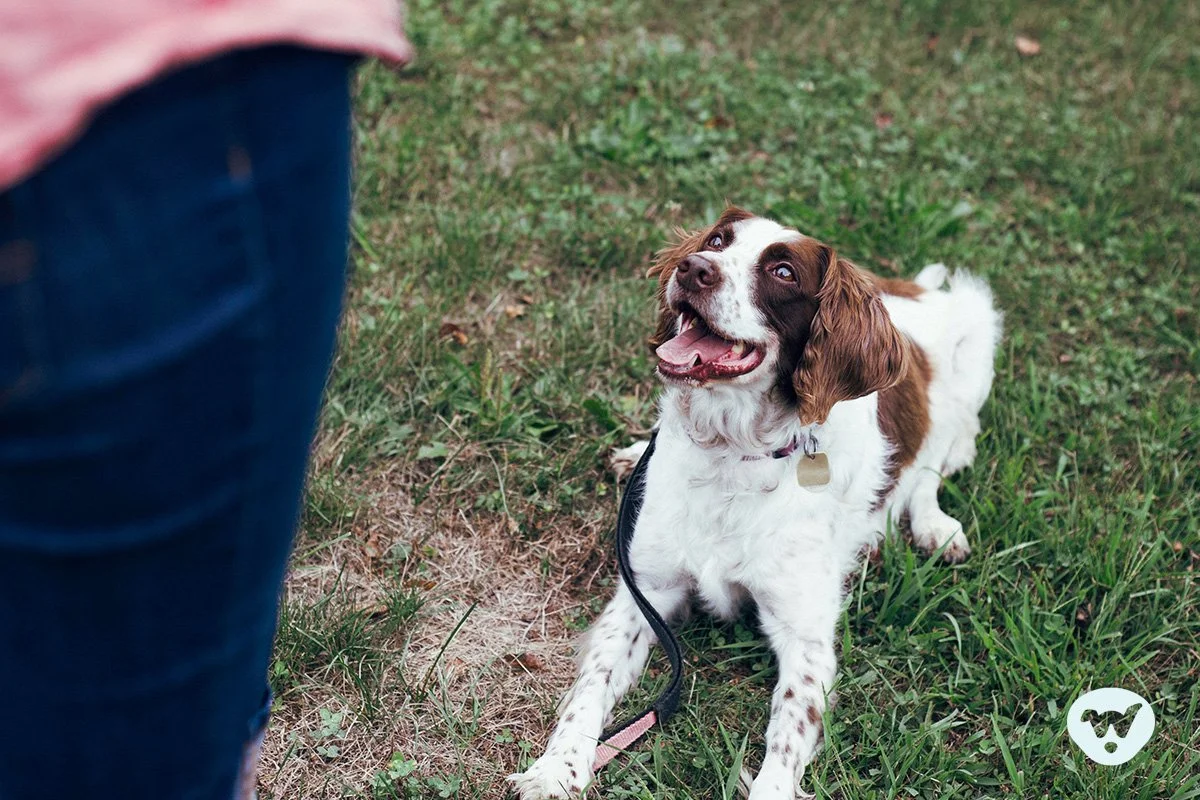
Teach your adolescent dog the skills they need through positive reinforcement and practice daily!
How to help your adolescent dog
Adolescent dogs can only act like dogs. They are struggling to adapt to our world while dealing with their changing brains and bodies.
Teach them the skills they need
Simple cues such as sit, mat training, and eye contact should be practiced and rewarded daily. Do not use punishment to try to correct unwanted behaviors.
Prevent “bad” behaviors
Use management and supervision to ensure that your dog cannot learn how to reward himself through reinforcers in the environment.
Work with a modern, science-based trainer
Modern dog trainers use the science of learning to create an enthusiastic partner in training and a positive experience for both the dog and the owner.
Work the mind
Nose work games or puzzles, confidence building through self-paced exploration, and trick training are all great ways to activate the mind!
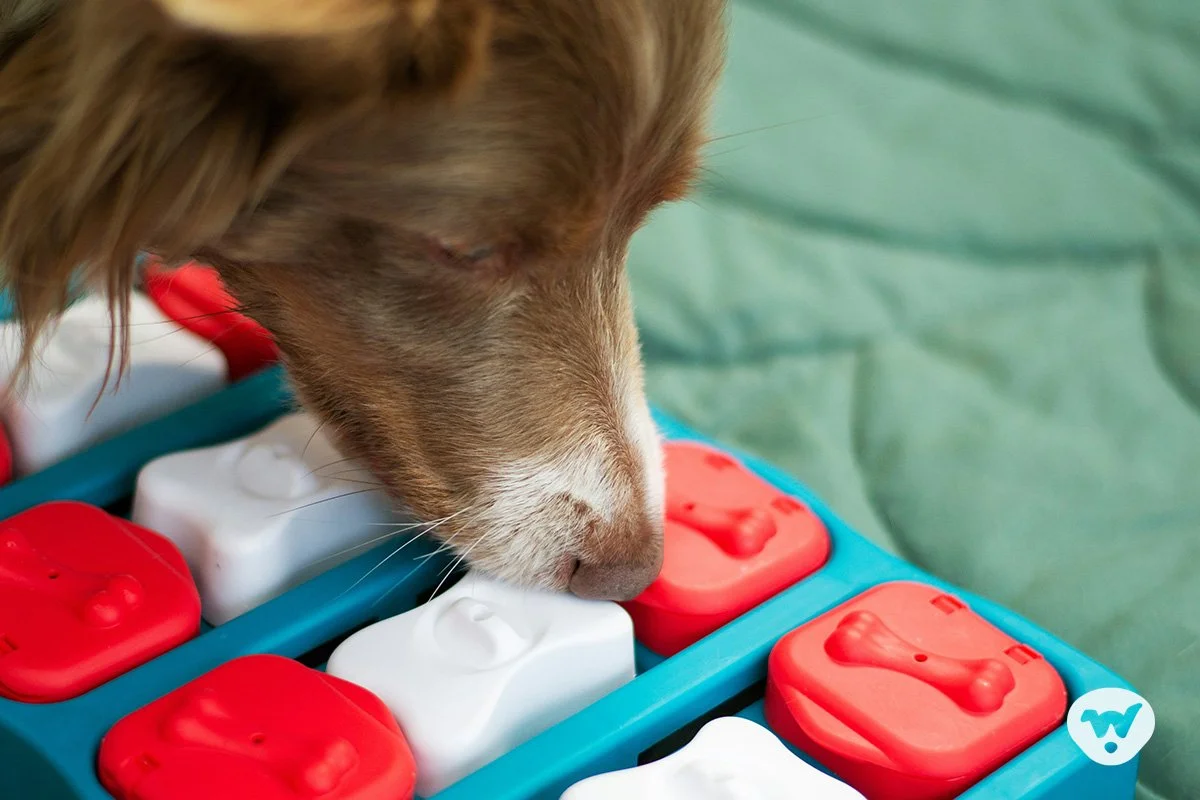
Puzzle toys make for a great mentally stimulating activity for your adolescent dog.
Mistakes are normal
Here are some common mistakes that owners of adolescent dogs make:
Training by “correcting” behavior
Dogs who are consistently punished become afraid to make choices. They may become shut down. Punishment doesn’t provide enough information on what the dog is supposed to do, it only empowers a human’s ego. Physical punishment may increase the likelihood that your dog will choose to escalate to aggression (snapping/biting).
Losing your temper
It can be frustrating when your dog’s behavior changes from day to day. Remember your dog is having a hard time during adolescence, not trying to give you a hard time.
Forcing your dog to face their fears
Never force your dog to approach anything he is afraid of. Allowing him to determine whether it is safe helps build confidence and trust. Forcing an approach breaks down your dog’s ability to trust YOU!
Using punitive training
This includes choke, prong, and electronic/e- (shock, vibration) collars. Bark collars may seem like a good idea, but the “fallout” is that your dog may become increasingly more fearful or learn that you cannot be trusted.
Are you looking for a dog trainer in Gainesville, Virginia?
I offer private dog training and group dog training classes in Bristow, Virginia.
Contact me to get started training your Wonderdog!
Adapted with permission from Surviving Your Puppy's Adolescence by Brenda Belmonte, CPDT-KA.