
How to Properly Socialize Your New Puppy
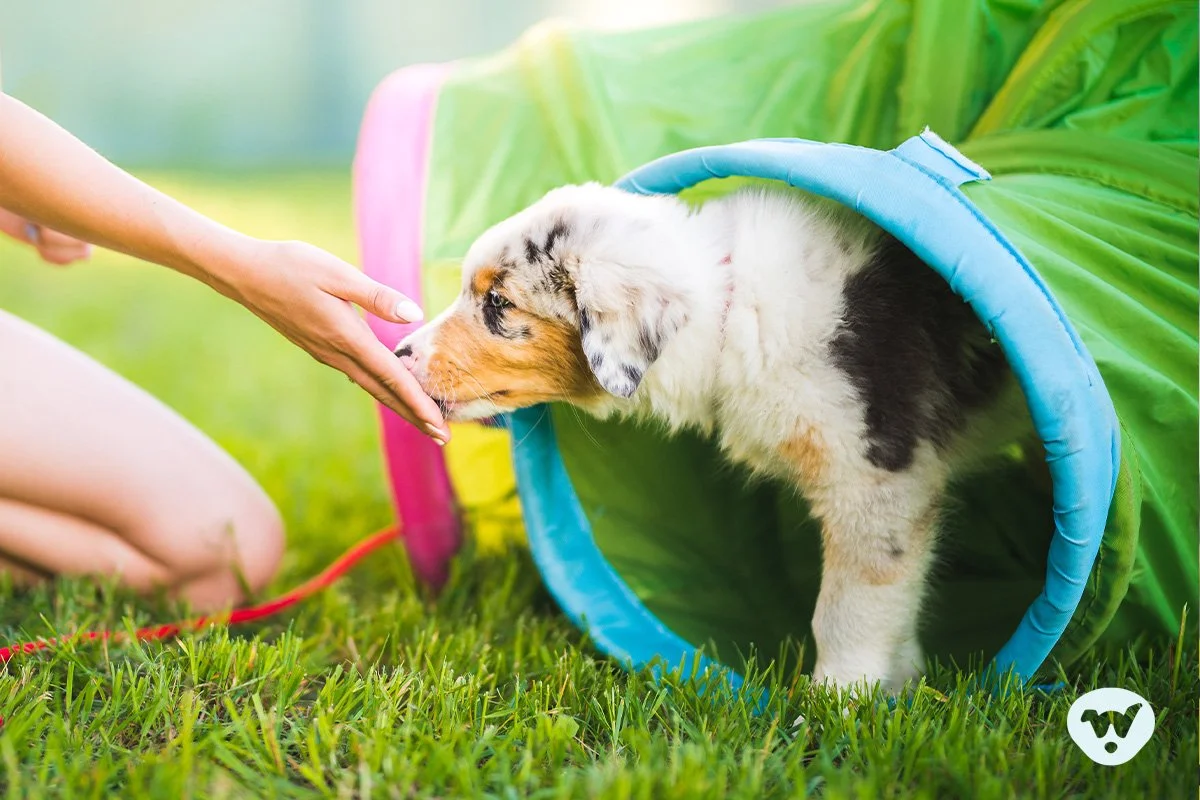
Puppies are always assessing things from a perspective of “safe” or “unsafe” and can build confidence by doing simple exercises such as learning to go through tunnels.
Socialization might sound simple, but it’s much more than simply introducing your puppy to your friends’ dogs!
You’ve just brought home a new bundle of joy—congratulations! I know there’s so much you can’t wait to do with your new puppy and so many things you want to teach them. A good Google search gives you so much information that it can be totally overwhelming. You’re not alone! There’s lots of information out there about new puppies, so where do you even get started?
Start with socialization!
While it may be tempting to begin training your new puppy right away, I recommend focusing the first few weeks together working on socialization.
Your puppy has a critical developmental period—referred to as the socialization period—that ends around 12 weeks of age. During your puppy’s first few weeks of life, it is important to help your puppy create as many positive associations with people, animals, places, sounds, and objects as possible.
During this developmental period, your puppy’s brain is primed for learning about these things by their innate curiosity and willingness to explore their environment. Once this socialization period closes, you don’t get a “do over.”
Why is socialization important?
Proper socialization during your puppy’s critical period helps your puppy grow up to be a well-adjusted dog and greatly reduces the risk of behavioral problems later in life, including fear and aggression.
How do I properly socialize my puppy?
Your job is to create positive associations with as many things as possible during these first 12 weeks. Exposure is not socialization. You need to pair each experience or thing with something your puppy finds enjoyable—like a yummy treat—and watch your puppy’s body language to make sure he is enjoying each and every interaction!
The first step in your socialization plan is to allow your puppy to learn to observe new environments calmly. Give your puppy distance from new things to allow them to observe the goings-on without social pressure to interact. When they are comfortable with the new environment, you can slowly decrease distance. Putting your puppy directly into a chaotic environment is like throwing a kid into the pool before they’ve learned to swim.
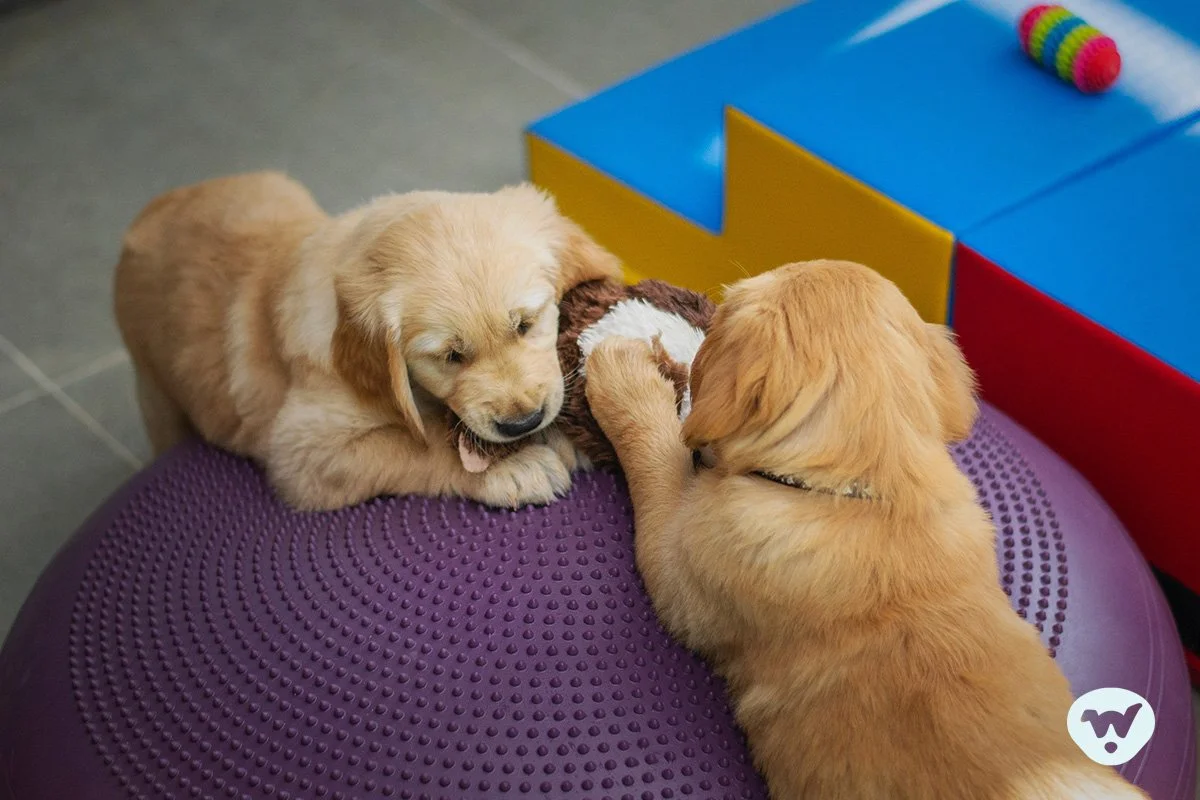
Puppy socialization should start early and include focus on safe and fun interaction with novelty.
What should be the focus of my puppy’s socialization?
I recommend you prioritize people, animals, places, sounds, and objects that your puppy will interact with, or is likely to interact with, throughout their life! Some of my suggestions are below, but take a moment, brainstorm, and make notes of anything you think is critical for your puppy to be successful in your life together!
PEOPLE
Let your puppy meet people of different ages, genders, and races! When doing your socialization set up, don’t forget to ask your helpers to use the props they have with them daily—like a stroller, a cane, or even a baseball hat! If it’s summertime, have some people bundle up in winter clothing. That drastically changes their appearance! Here are some more ideas:
Kids (babies, toddlers, tweens)
Seniors
People on crutches
People who move erratically
Strangers visiting your home
People carrying things
People on wheels (bikes, skateboards, etc)
People in uniforms
People seen from a distance without interaction (it’s important for your puppy to also learn they don’t get to greet everyone they meet!)
ANIMALS
When picking doggy play partners, pick adult dogs that play well with puppies and set clear boundaries. Let your puppy play with other puppies of his/her age. Finally, don’t forget to allow your pup to safely meet other species of animals they will encounter throughout their life! Here are some more ideas:
Dogs (a variety — different ear types, different hair lengths, quiet, barky, big, small, bouncy, etc)
Cats
Horses
Cows
Birds
Small Animals
PLACES
Where will your puppy go in his adult life? Consider suburban neighborhoods, city streets, downtown areas, store parking lots, inside dog-friendly buildings, and parks. Go slow! Some of these environments can be overwhelming to puppies. Here are some more ideas:
Puppy class
Friends’ homes
Your front yard
Your neighbor’s backyard
Your vet’s office
Pet stores
Groomers
Shopping centers
Parking lots
Elevators
Hardware stores
Cafes
SOUNDS
Get creative and use a YouTube to create a playlist of sounds for your puppy. Include sounds like thunder, fireworks, babies crying, alarms, construction, doorbells, trash trucks, the vacuum, and sirens. Here are some more ideas:
Garbage trucks
Garage doors
Dishwasher
Blender
Pots and pans
Kids playing
Babies crying
OBJECTS & obstacles
Look around your house for novel objects such as pots and pans, boxes, brooms, balloons, umbrellas, and garbage cans to allow your puppy to investigate safely! When you’re outside, pay attention to cars, buses, motorcycles, bicycles, and even lawnmowers! Here are some more ideas:
Trash bags
Flags and banners
Statues and decor
Objects that wobble
Objects that move
Stairs
Getting into and out of cars
Push carts
Slippery surfaces
Car rides
How do I know if my puppy is enjoying their interaction?
If your puppy is enjoying their socialization outing, they will have a wiggly body and a soft facial expression. If they are afraid, you’ll see stress cues through their body language such as a tired appearance, frequent stops to scratch or sniff, yawning, panting, or shaking their body as if they’re wet. Never force any interactions! Go at your puppy’s comfort level, otherwise you risk creating a bad association that could last a lifetime. If you notice discomfort in your puppy, decrease the intensity of the interaction by giving your puppy more space or doing shorter socialization sessions.
Pro Tip: Take every opportunity you can to learn more about your dog’s body language. It’s how they’ll communicate with you throughout their life! Here is my favorite infographic by illustrator Lili Chin.
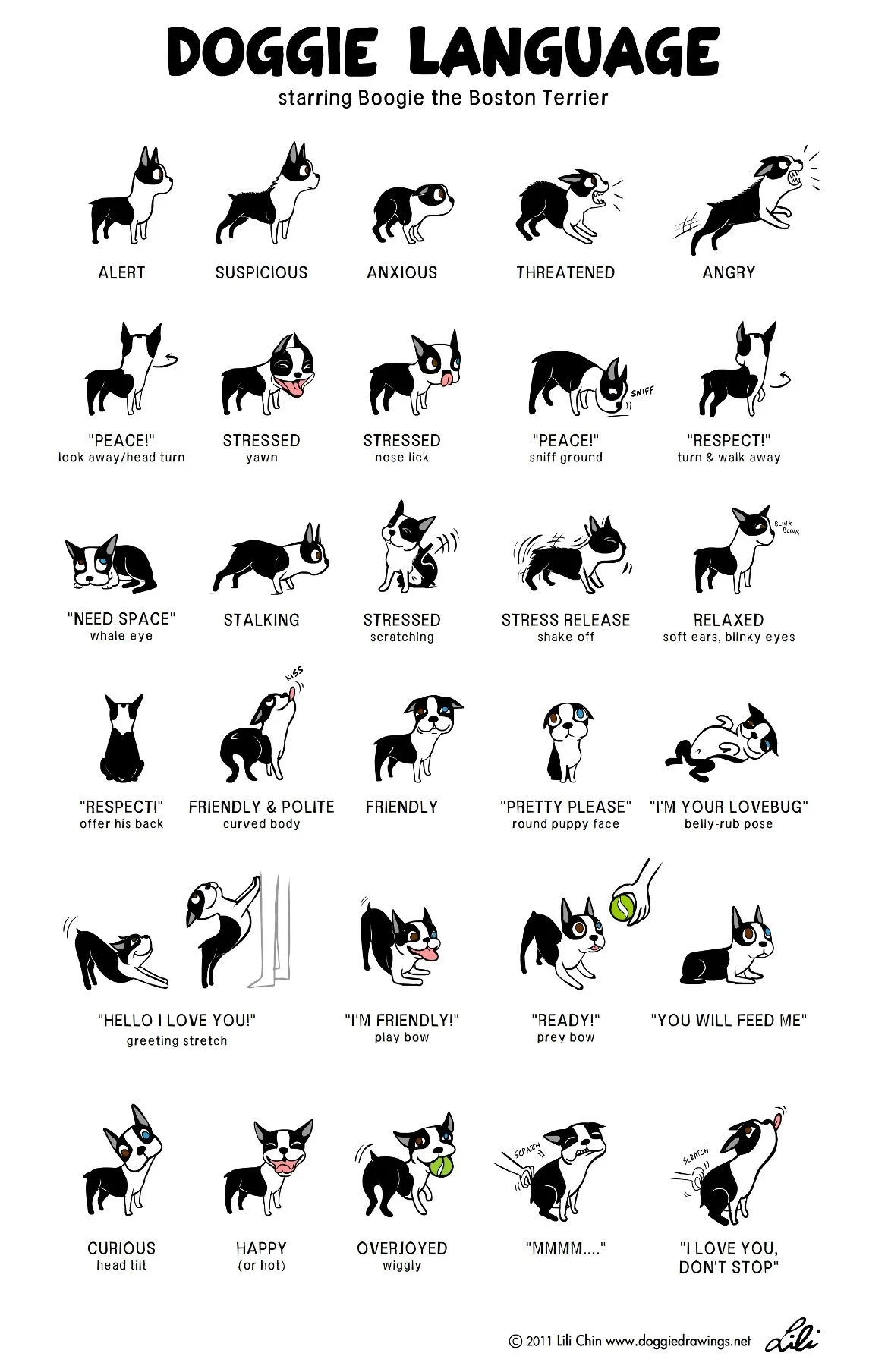
Use this infographic by Lili Chin to reference common body language cues your puppy may display!
Want to learn more?
The Puppy Socialization Project is a great resource to learn more about puppy socialization. Visit www.puppysocialization.com for more information!
Are you looking for a dog trainer in Gainesville, Virginia?
I offer private dog training and group dog training classes in Bristow, Virginia.
Contact me to get started training your Wonderdog!